What happened to Teotihuacan
Around the sixth century the ceremonial heart of Teotihuacan was burned, and the burning was selective. Revolt, drought, trade collapse: what the evidence supports and what it does not.
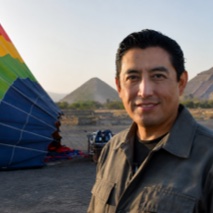 By Alejandro Ramírez, Teotihuacan hot air balloon specialist and experience guide
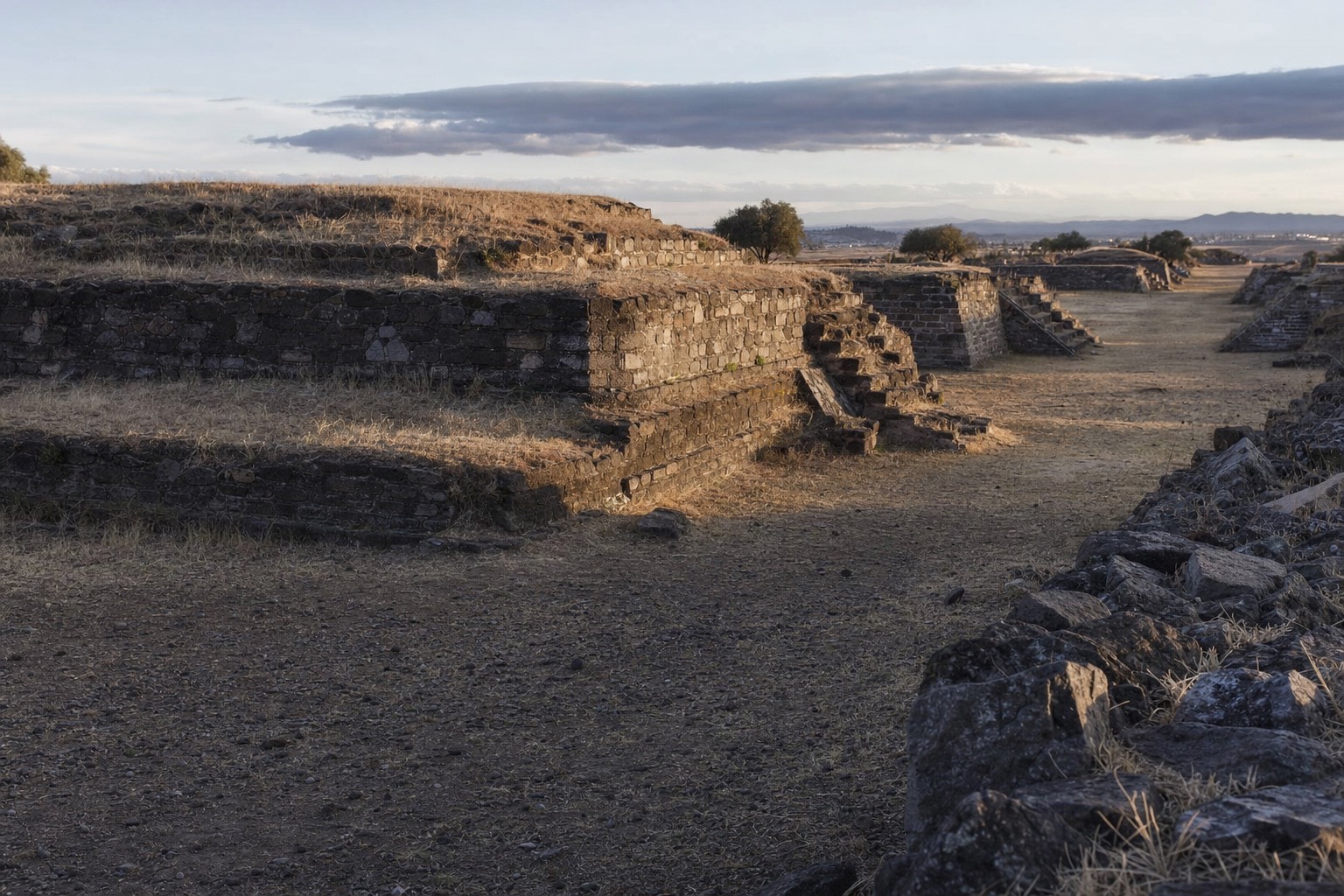
A city of possibly a hundred thousand people, one of the largest on earth, stopped. Not slowly, at the centre. The monumental buildings along the Avenue of the Dead were burned, and six hundred years later the Aztecs walked into an empty ruin and assumed gods had made it.
Booking choice
The collapse is a ground story and the ambition is an air story: the archaeologist-led tour tells the first, and the sunrise flight shows the second.
Here is what the evidence actually supports.
The burning was selective
This is the fact that shapes every explanation. Around the middle of the sixth century, structures along the ceremonial core were burned. The burning concentrated on elite residences and temples rather than spreading across the residential districts.
A foreign army sacking a city does not usually work that way. It takes what it wants and burns what is convenient. Targeting the ceremonial and elite architecture specifically, while ordinary apartment compounds survive, reads more like people who knew exactly which buildings represented the thing they were angry at.
That is the strongest single argument for internal collapse: revolt, factional conflict, or a rejection of the ruling institution by the city's own population.
What else was going on
| Factor | What the evidence looks like |
|---|---|
| Selective burning of the ceremonial core | The clearest physical evidence, and it points inward rather than outward |
| Environmental stress | Central Mexico saw climatic pressure in this period, and a city of this size fed itself from a finite valley |
| Trade and obsidian | Teotihuacan's wealth rested on controlling obsidian distribution. Competitors emerging elsewhere would erode the basis of the whole thing |
| Population pressure | Tens of thousands of people in standardised compounds, dependent on a system that had to keep delivering |
| Foreign invasion | Possible, but the burning pattern argues against it as the primary cause |
The honest summary is that these are not competing theories so much as a stack. A city under environmental and economic strain, whose ruling institution loses its claim on the population, is a city where somebody eventually burns the temples.
It did not empty overnight
Teotihuacan was not abandoned the morning after the fire. People continued living in parts of it for a long time afterwards, in reduced circumstances, without the monumental construction and without whatever central authority had organised the grid.
What ended was the city as a project: the planning, the building, the trade dominance, the reach that had let Teotihuacan install a ruler at Tikal in the fourth century. By around 750 CE the place was finished as a power.
Then it stood there, for six centuries, as an enormous ruin in a landscape that people still farmed and lived in.
What the Aztecs made of it
They arrived in the valley of Mexico much later and founded Tenochtitlan in 1325. By then the pyramids had been empty for longer than the gap between us and the Renaissance.
They had no memory of who built it, so they explained it theologically. The name they gave it, Teotihuacan, translates roughly as the place where the gods were created. They made pilgrimages, buried offerings, and named the buildings: the Avenue of the Dead, the Pyramid of the Sun, the Pyramid of the Moon. Every one of those names is Aztec, not original, which is the confusion at the heart of is Teotihuacan Aztec or Mayan.
What you can actually see of the collapse
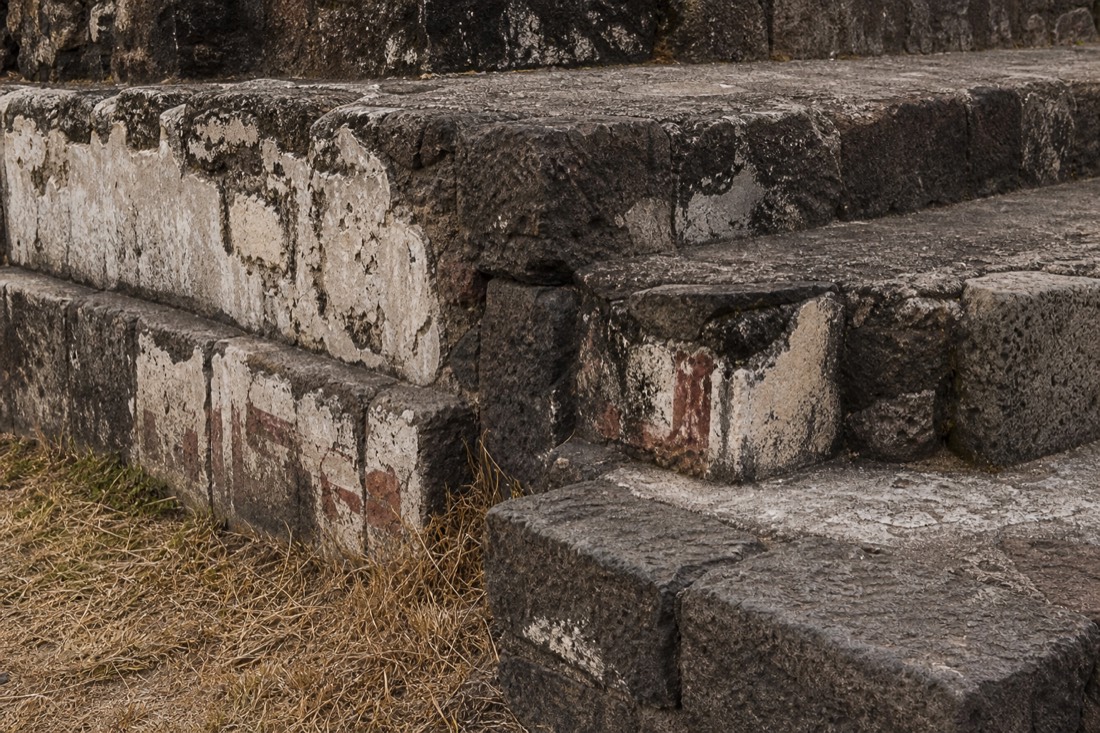
Not much, honestly, and that is worth knowing before you go looking. The burning left archaeological traces rather than dramatic visible ruins, and the site has been consolidated and restored over more than a century of excavation.
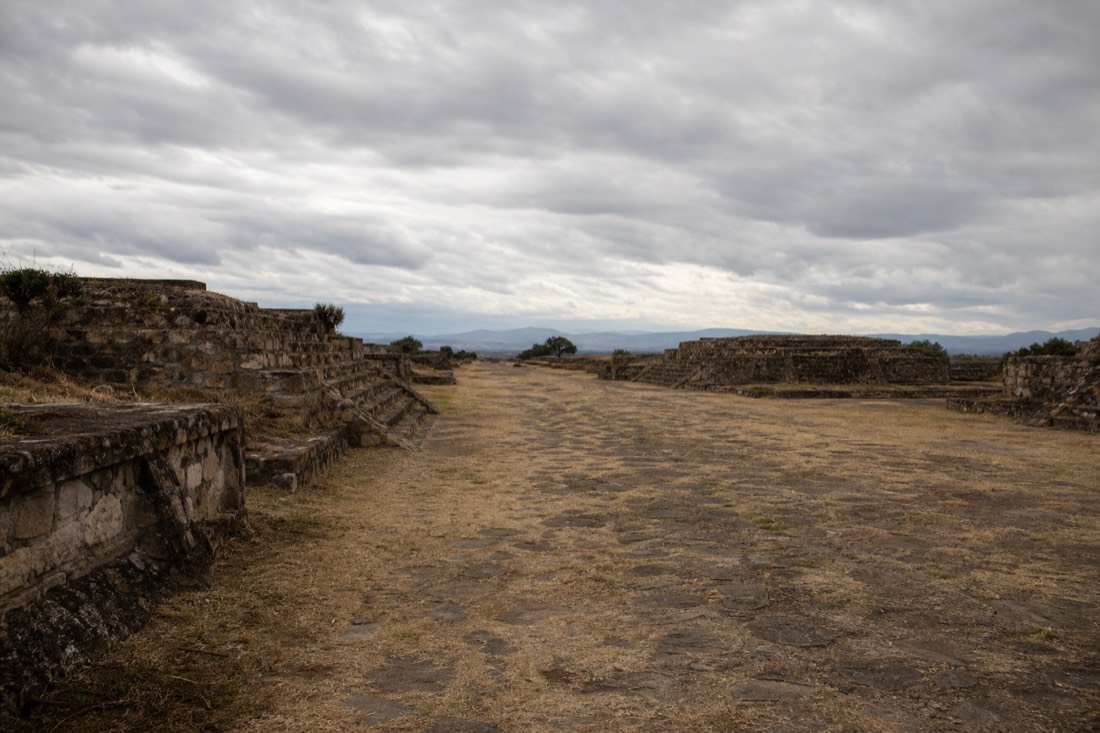
What you can do is stand on the Avenue of the Dead knowing that the buildings on either side of you were deliberately set alight by people who lived here. That reframes the walk. The site museum, where the finds and the interpretation live, is where the story is actually told, and it is the part visitors on a compressed balloon-package schedule most often skip.
From the air the collapse is invisible, and what you get instead is the ambition: the full two-kilometre axis, the alignment of the Pyramid of the Moon with Cerro Gordo, the sheer completeness of the plan. Seeing how organised it was is what makes the ending land.
The part that stays with you
Teotihuacan is not a city that was conquered and remembered. It is a city whose own name is lost, whose rulers left no portraits, and whose people appear to have burned the heart of it themselves.
Then everyone forgot who they were, and the next civilisation to find the ruins decided only gods could have built them. Whatever makes a place worth flying over at sunrise, that is a strong candidate.
From peak to ruin, in order
| 100-550 CE | Teotihuacan's peak: one of the largest cities in the world, controlling the Mesoamerican obsidian trade |
|---|---|
| c. 550 CE | The ceremonial core is burned, selectively, targeting elite and temple buildings |
| c. 550-750 CE | Reduced habitation continues without the monumental construction or central authority of the peak era |
| c. 750 CE | The city is effectively finished as a regional power |
| 750-1325 CE | Roughly six centuries as an empty ruin in an inhabited landscape |
| 1325 CE onward | The Aztecs found Tenochtitlan nearby, later discover the ruins and name them Teotihuacan |
Plan your morning above Teotihuacan
Check the outing that fits your day
Initial editorial choice, not a personalized eligibility check. Confirm the operator’s full requirements before booking.
How do you want to meet the ending: evidence on the ground or the whole plan at once?
This screens only the details you enter. Health, pregnancy, the 220 to 308 lb balloon surcharge band, language, pickup zones and all remaining restrictions still need operator confirmation. Time allowances include check-in and travel where the listing states them.
- Private Teotihuacan tour with an archaeologist and VR experience. Answers the history questions a general guide skims: what the city was, who built it, and what the murals meant, from a working archaeologist. About half a day; confirm timing on the listing. You arrange your own transport to the meeting point; no hotel pickup. Children from about 6 per the listing age bands.
- Balloon flight with CDMX pickup, cave breakfast and pyramids visit. The full sunrise sequence in one booking: flight, cave breakfast and the ruins walked with a guide. About 4 to 7 hours door to door; pickup between 4:20 and 5:10 a.m. Shared basket; you climb into the basket. Site entry fee is extra. Over 100 kg (220 lb) up to 120 kg costs MXN 500 more; over 120 kg up to 140 kg costs MXN 1,000 more, per the listing. Weather moves or cancels flights.
- Private Teotihuacan tour from Mexico City with entry tickets. A private guide and door-to-door transport for the pyramids themselves, on a day you keep for the ground. Roughly 5 to 6 hours door to door; confirm on the listing. Adult price bands start at 18 per the listing; child pricing applies up to about 7 years. A ground tour, not a flight.
Compare your actual party totals
Enter current quotes in the same currency. “Separate spending” means costs you would actually avoid, not a day you still pay for.
Private Teotihuacan tour with an archaeologist and VR experience
Have a travel date in mind? Check it before arranging the rest of the day. Answers the history questions a general guide skims: what the city was, who built it, and what the murals meant, from a working archaeologist.
About half a day; confirm timing on the listing. Entry fees, archaeologist-led private tour, VR experience, educational materials.
You arrange your own transport to the meeting point; no hotel pickup. Children from about 6 per the listing age bands.
Schedule loading. You can still check dates directly on Viator below.
Scheduled dates are not confirmed seats. Select the same date on Viator to confirm availability and the final price.