What a 4:20am pickup for a balloon flight actually feels like
Operators publish the pickup window and leave it there. Here is what those hours actually contain, from the alarm to the launch field, and how travellers describe them.
 By Alejandro Ramírez, Teotihuacan hot air balloon specialist and experience guide
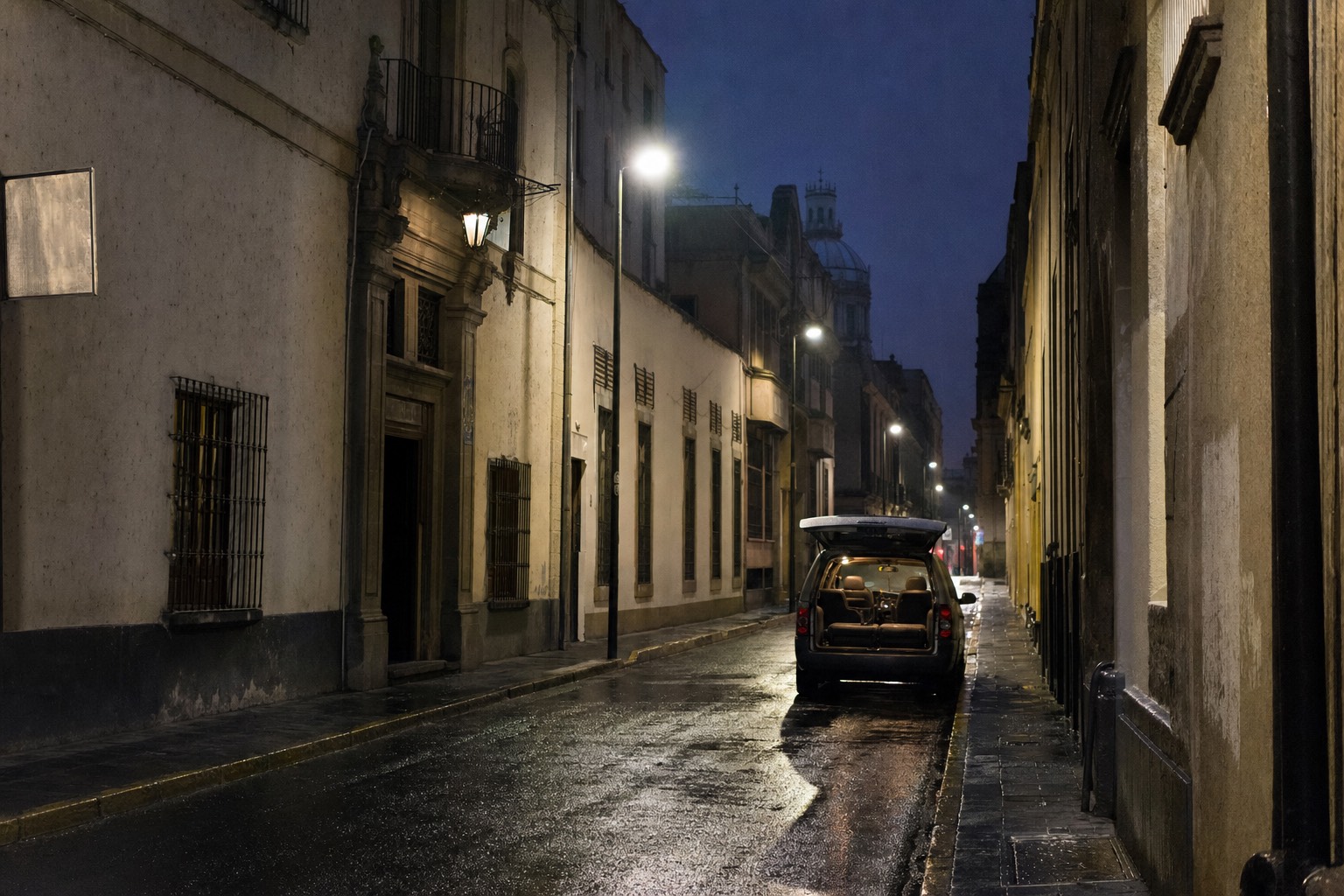
An operator's listing states the pickup window as "between 4:20 and 5:10 AM (depending on your location). Grace Period: Maximum 5 minutes." Those two sentences contain most of what goes wrong with this day, and almost nothing about what it feels like.
Booking choice
The 4:20 version is brutal but bookable: the most-reviewed flight confirms the van, the breakfast and the zone in one cancellable booking, from five neighbourhoods.
Travellers fill in the rest. "Pickup at 5am, back at the hotel by 2pm," one wrote on Reddit. Another: "Our pick up time was 415am." A third, on the same thread, described waking at 4:45 and being told to be downstairs in fifteen minutes.
The night before is the actual problem
Nobody sleeps well before a 4 a.m. alarm. The mechanism is well known and it does not care that you know it: you lie there checking whether the alarm is set, calculating how many hours are left, and losing a chunk of them to the calculation.
So plan on the assumption of bad sleep rather than trying to prevent it. Eat early, which in Mexico City means fighting the local clock, because dinner at nine is normal and dinner at seven means an empty restaurant. Lay everything out. Put the phone across the room so turning it off requires standing up.
The clothing decision especially should happen the night before, when you are capable of thought. You want layers you can shed by nine and closed flat shoes for the landing, and at 3:50 a.m. you will put on whatever is nearest. Our what to wear guide is a checklist you can follow while half asleep.
Between the alarm and the van
There is no coffee. This is the detail that surprises people most. Hotel breakfast service does not start at four, room service is closed, and the café on the corner that opens at seven is closed at four in the morning like everything else.
Breakfast comes after you land, usually between 8:30 and 10:00, which is a long time from a 3:45 alarm. If you are the sort of person who gets shaky without food, bring something small, with the caveat that you will be standing in a field and then in a basket with nowhere to put anything down.
Get to the lobby ten minutes before the earliest time you were given. The grace period is about five minutes and there are fifteen other people in the van, and the launch window closes whether or not you are in it. A missed pickup is a no-show, and a no-show is non-refundable.
The van
Somewhere between one and two hours, depending where you sit on the collection route. This is why two people on the same balloon report a 4:15 and a 5:05 pickup: they were the first and the last stop.
The drive is 50 km on a dark motorway, and the van is quiet in the way that vehicles full of strangers at half past four are quiet. Most people sleep, badly, at an angle. Some watch the city thin out into the State of Mexico.
Then you arrive, and the tone changes completely.
The launch field, which is the best part
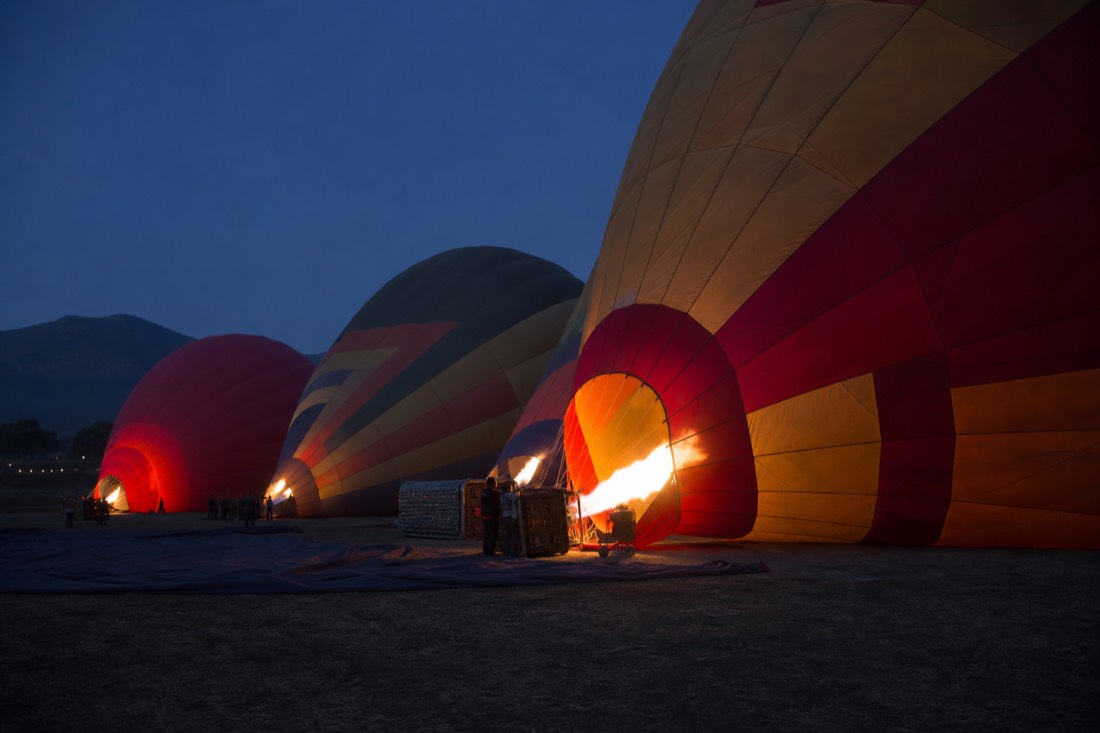
You get to the field around six, and there is roughly 45 minutes before anything flies. That sounds like more waiting. It is not.
Crews unroll envelopes across the ground in the half-dark. Fans push cold air in until the fabric lifts into a shape. Then the burners fire, and the whole field turns into a set of enormous paper lanterns going up one after another with a noise like a jet engine clearing its throat. It is loud, and it is warm when you stand near one, and it is the thing people photograph most from the entire morning.
Take-off is around 6:45, timed to first light. It can slip: one traveller reported waiting out the wind and lifting at 7:15, past the golden hour they had booked for. The pilot is right to wait and it is still a disappointment. The full timeline sets out how the rest of the morning falls.
How the whole thing scores against the sleep
Here is the trade in one table.
| What you give up | What you get |
|---|---|
| A night's sleep, roughly four hours of it | The valley at sunrise, with both pyramids and the Avenue of the Dead visible at once |
| Most of the following day, since you are useless by four in the afternoon | 30 to 60 minutes in the air, and the launch field before it |
| Any plan requiring concentration that evening | The archaeological zone at ten, before the coaches arrive |
| Roughly $159 to $263 | The only elevated view of the site left, since the pyramid steps closed |
Whether that is a good trade is the subject of is it worth it, and the answer for most people is yes with reservations.
The one thing that fixes the pickup
Do not sleep in Mexico City.
If a 3:45 alarm is genuinely unmanageable, or you have children, stay near Teotihuacan the night before and book a flight-only ticket. Your alarm becomes 5:15, the van disappears, and the flight itself is cheaper because you are not paying for the transport. The cost of it is a night out of the city, which for a short trip is a real cost and for a longer one is not.
Almost nobody does this, and almost everybody who has done the 4:20 version says afterwards that they wish they had known it was an option.
If the city version is the one you are taking, the neighbourhood you sleep in decides how brutal it is. The flight with hotel pickup from Reforma, Condesa, Roma, Polanco and the Centro Histórico is the one that collects from your door rather than sending you to a meeting point in the dark.
After you land
Plan nothing. This is the advice people ignore and then regret. You have been awake since before four, been at 2,100 metres and above, and eaten a large breakfast at half past eight. By four in the afternoon you are done.
Book the flight for a day whose evening is free, and do not put a reservation, a museum with timed entry or a long dinner on the other side of it. Mexico City will still be there tomorrow, and you will enjoy it considerably more.
What five different mornings actually looked like
Pickup times vary enough between travellers on the same route that it is worth seeing the spread rather than a single average.
| 4:15 a.m. | Reported as the earliest end of the window, likely the first stop on that morning's route |
|---|---|
| 4:20-4:40 a.m. | The published start of the standard window for most central neighbourhoods |
| 4:45-5:00 a.m. | A common middle-of-route time |
| 5:05-5:10 a.m. | The published end of the window, typically the last stop before heading out of the city |
None of this is something you can request. It depends on who else is on your route that specific morning, which is decided the night before by the operator, not by you.
Plan your morning above Teotihuacan
Check the outing that fits your day
Initial editorial choice, not a personalized eligibility check. Confirm the operator’s full requirements before booking.
Can your party absorb the 4 a.m. version, or should the day be restructured?
This screens only the details you enter. Health, pregnancy, the 220 to 308 lb balloon surcharge band, language, pickup zones and all remaining restrictions still need operator confirmation. Time allowances include check-in and travel where the listing states them.
- Balloon flight with CDMX pickup, cave breakfast and pyramids visit. The full sunrise sequence in one booking: flight, cave breakfast and the ruins walked with a guide. About 4 to 7 hours door to door; pickup between 4:20 and 5:10 a.m. Shared basket; you climb into the basket. Site entry fee is extra. Over 100 kg (220 lb) up to 120 kg costs MXN 500 more; over 120 kg up to 140 kg costs MXN 1,000 more, per the listing. Weather moves or cancels flights.
- Balloon ride with breakfast and central meeting-point transport. Fixed, simple logistics: one known central meeting point, no hotel-by-hotel pickup circuit. Morning into early afternoon; confirm timings on the listing. You reach the Angel de la Independencia meeting point on your own; that is not a hotel pickup. Confirm age limits on the listing.
- Balloon flight, La Gruta cave breakfast and guided pyramids tour. The actual La Gruta restaurant, inside a lava cave, booked as part of the morning instead of gambled on walk-up. About 8.5 hours door to door. The archaeological-site entry ticket and lunch are not included. Bookings need at least one adult. Shared basket; you climb in. Weather moves or cancels flights.
Compare your actual party totals
Enter current quotes in the same currency. “Separate spending” means costs you would actually avoid, not a day you still pay for.
Balloon flight with CDMX pickup, cave breakfast and pyramids visit
Have a travel date in mind? Check it before arranging the rest of the day. The full sunrise sequence in one booking: flight, cave breakfast and the ruins walked with a guide.
About 4 to 7 hours door to door; pickup between 4:20 and 5:10 a.m. Balloon flight, toast and flight certificate, optional underground-cave breakfast, about 1.5 hours in the archaeological zone, transport from Mexico City when selected.
Shared basket; you climb into the basket. Site entry fee is extra. Over 100 kg (220 lb) up to 120 kg costs MXN 500 more; over 120 kg up to 140 kg costs MXN 1,000 more, per the listing. Weather moves or cancels flights.
Schedule loading. You can still check dates directly on Viator below.
Scheduled dates are not confirmed seats. Select the same date on Viator to confirm availability and the final price.